Wrong-Number Text Crypto Scams: How a Casual Message Turns Into a Fake Investment
A practical breakdown of wrong-number text scams, the grooming script that follows, and the moment a friendly chat becomes a crypto investment trap.
Key takeaways
- The first message is designed to feel harmless, accidental, and easy to answer.
- The scammer usually moves the conversation to a private messaging app quickly.
- The investment pitch may arrive days or weeks after the first friendly contact.
Why wrong-number messages work
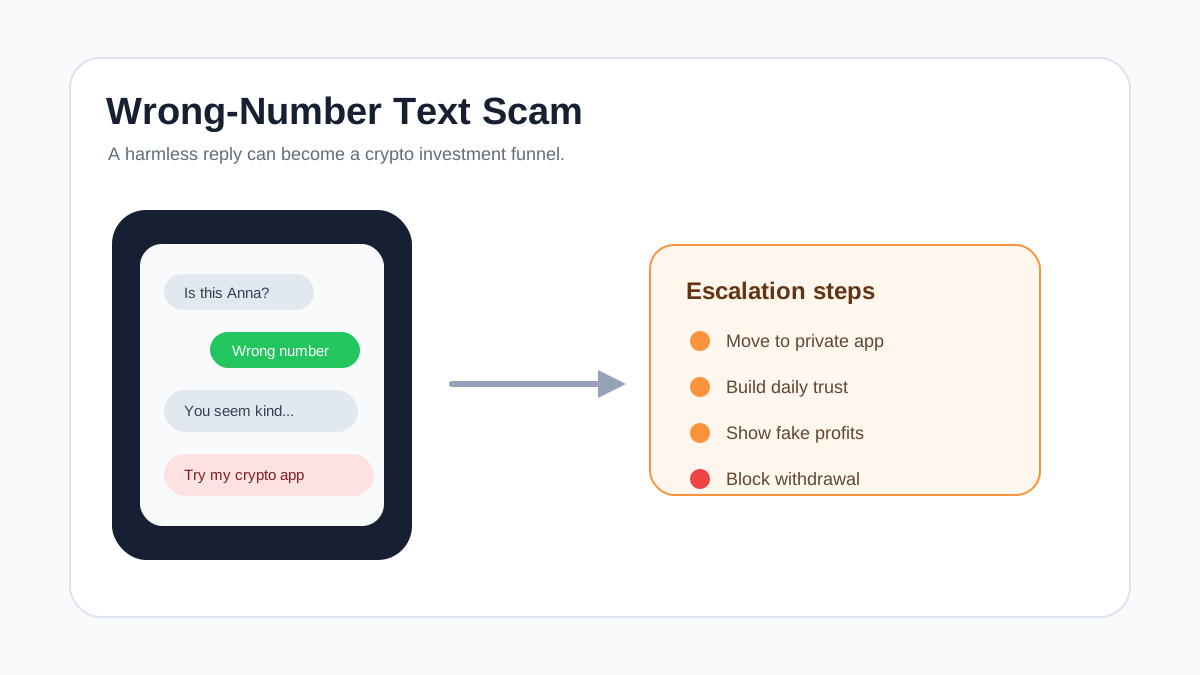
The wrong-number opening is effective because it does not look like a sales pitch. A message such as "Are we still meeting tomorrow?" or "Is this Anna?" invites a polite correction. If the target responds, the scammer turns the mistake into a friendly exchange.
The goal is to test whether the person will engage. Once the target replies, the scammer can build a profile: age, location, job, relationship status, stress level, savings goals, and willingness to continue a conversation with a stranger.
- The message feels personal, but it may be sent at scale to thousands of numbers.
- The scammer often apologizes, compliments the target, and asks to stay in touch.
- The conversation usually moves to WhatsApp, Telegram, Signal, or another private app.
The shift from chat to money
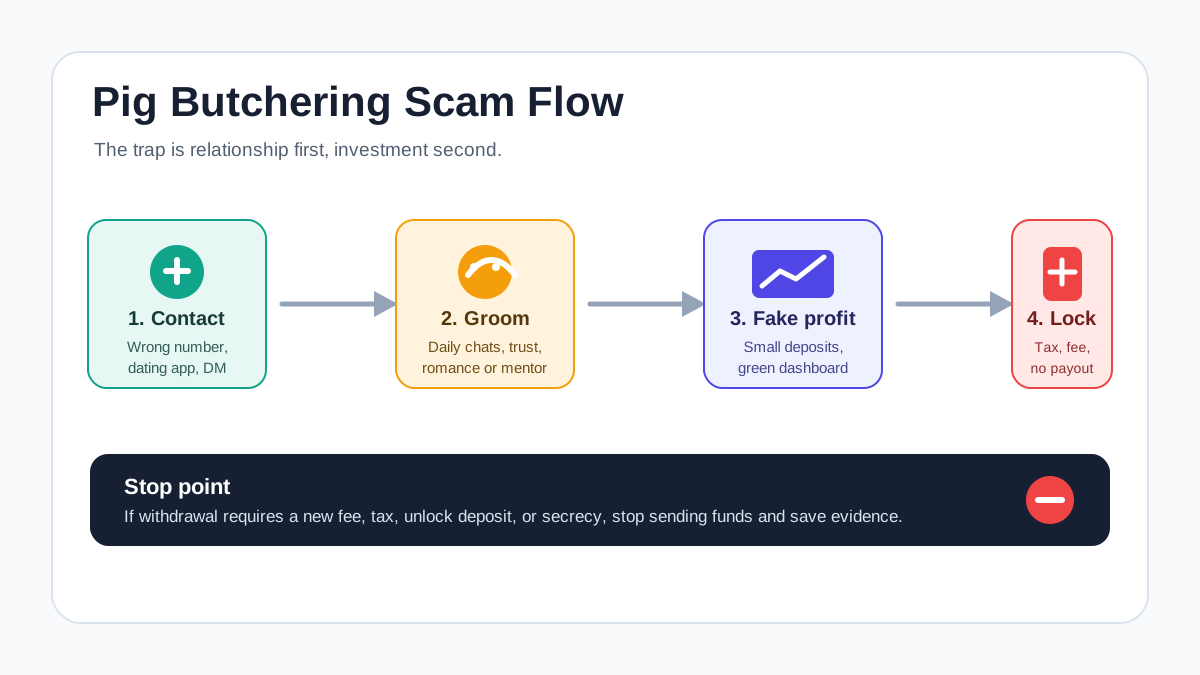
At first, the scammer may talk about food, travel, pets, family, or business. Later, they mention trading profits, a wealthy relative, a crypto analyst, an AI trading tool, or a short-term market opportunity. The pitch is framed as help from a trusted friend, not as a cold investment offer.
The FTC warns that unexpected social media messages about investment opportunities almost always lead to scams. The same logic applies to wrong-number texts: a person who just met you online should not become your financial advisor.
The fake proof loop
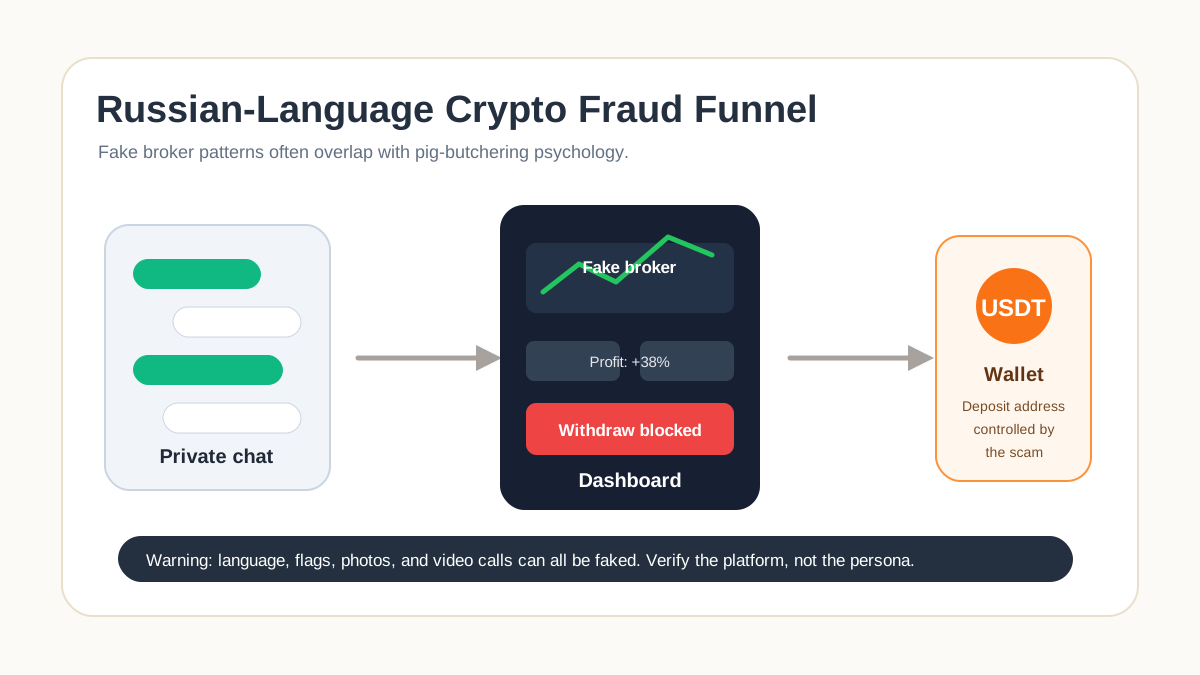
The scammer may send screenshots of profits, photos of a luxury lifestyle, or a screen recording of a fake trading account. They may ask the target to start with a small amount, then celebrate the first fake gain as evidence that the platform works.
Some victims are allowed to withdraw a small amount early. That withdrawal is not proof of legitimacy; it is bait. The operation can afford to return a small sum if it makes the victim comfortable sending much larger deposits later.
Simple rule
If an online stranger introduced the platform, the platform should be treated as unsafe until independently verified through official regulators and trusted sources.
How to respond safely
The safest answer to an unexpected text is no answer. If you already replied, stop sharing personal details. Do not click links, do not install apps, do not scan QR codes, and do not move the conversation to a private app.
If a friend or family member is already deep in the conversation, focus on the pattern rather than arguing about the person. Ask whether they can withdraw without paying fees, whether the platform is regulated, and whether they would trust the same offer if it came from a stranger at a bank counter.